Petty Cash: How to Track Small Cash Payments
Set a fixed cash amount, keep a receipt for each purchase and check the money before topping it up. Learn what to do when the count is wrong.
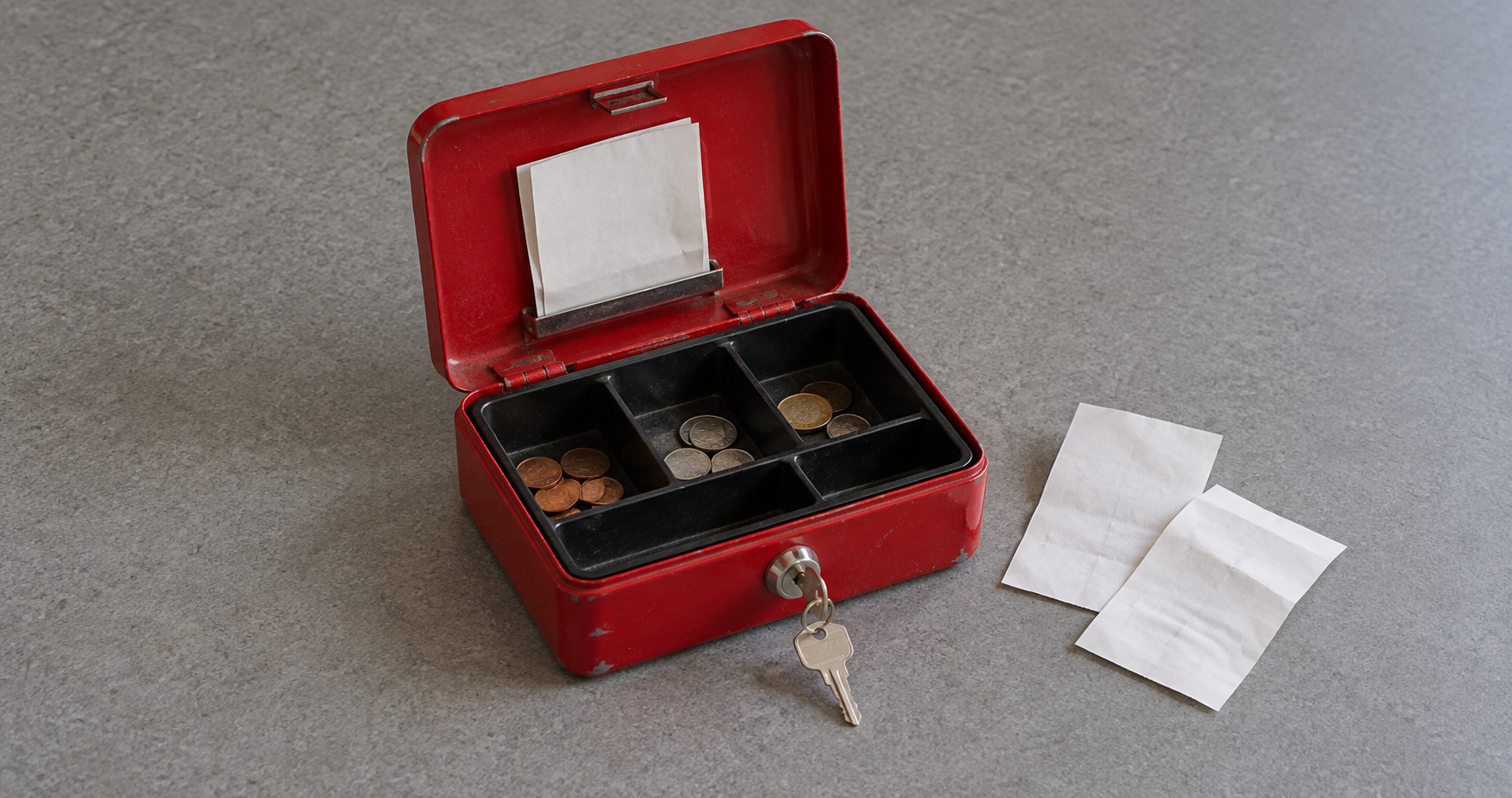
Petty cash is a small amount kept for occasional cash purchases. It should not become an unofficial second bank account. Set a fixed amount, called a float. Under this fixed-float or imprest system, the cash left plus purchases backed by receipts should equal the approved starting amount.
The float is a business policy choice, not a Canadian tax threshold. Choose an amount that fits genuine cash needs, and consider whether a documented electronic-payment process would remove the need altogether.
Set the small rules before opening the box
Put one person in charge of the cash and store it securely. Choose someone else to check it. Set a limit for each payment, list allowed purchases and say which records are needed. Do not mix in cash received from customers, staff advances or personal borrowing unless a separate approved procedure specifically covers them.
When custody changes, both people should count and acknowledge the handover. “Everyone has the key” makes responsibility difficult to establish. A spare key can have a controlled location without turning access into a shared habit.
Establish the float through a documented transfer and keep that authorization. Money sitting unused in the box is still cash, not an expense. Increasing or closing the float should have its own approval and accounting trail rather than being buried in a routine replenishment.
Give every payment its own trail
Record the date, amount, purpose, recipient, and receipt reference when cash leaves. Keep the receipt with the voucher or log entry. A description such as “miscellaneous” rarely explains why the purchase belonged to the business.
| Reference | Purpose | Cash paid |
|---|---|---|
| PC-01 | Small backstage supplies | $18.40 |
| PC-02 | Replacement hardware | $26.60 |
| PC-03 | Local delivery charge | $15.00 |
These are fictional authorized purchases, not a determination of deductibility or recoverable tax. The log total is $60.00. The expected cash remaining is $200.00 − $60.00 = $140.00.
Replenish without counting the expense twice
At review, count actual notes and coins, total the supported vouchers, and compare the combined amount with the authorized float. In the example, $140 cash plus $60 receipts equals $200. Replenishing $60 restores the cash to $200; it does not increase the authorized float to $260.
Record each purchase as an expense only once, following your accounting process. Moving money from the bank into the box is not automatically another expense. Connect the top-up record to the receipts and mark them as processed. Staff should not submit them again for reimbursement.
If a purchase includes recoverable sales tax, retain the supplier evidence and apply the relevant rules. Do not claim tax simply because an amount passed through petty cash.
When finishing the books for a period, list purchases not yet topped up. Make sure they are recorded in the right period. Use the actual purchase date on the payment record, not the later bank-transfer date. If a receipt is missing, write down what happened and whether the payment is approved. A signed explanation does not automatically replace a supplier receipt for every purpose.
Handle differences openly
If the count finds $137 rather than $140, the fund has a $3 discrepancy. Do not invent a receipt or change a real purchase to force agreement. Recount, check change and vouchers, document the difference, and follow the approved escalation and accounting policy.
- Count at each replenishment and at the reporting cut-off.
- Have the reviewer check receipts and unusual patterns.
- Resolve missing evidence without disguising it as a valid receipt.
- Keep the cash count, approval, and bank transfer reference together.
- Review whether the float is still useful or should be reduced.
A larger float does not fix a weak process. Bookwits can coordinate the recurring count checklist and missing-receipt follow-up, while the actual cash count and accounting stay with the responsible people and their records.