Undeposited funds: why one bank deposit can contain several customer payments
Follow three customer payments from receipt to bank deposit. See why a deposit is not another sale and how to check amounts still waiting to be deposited.
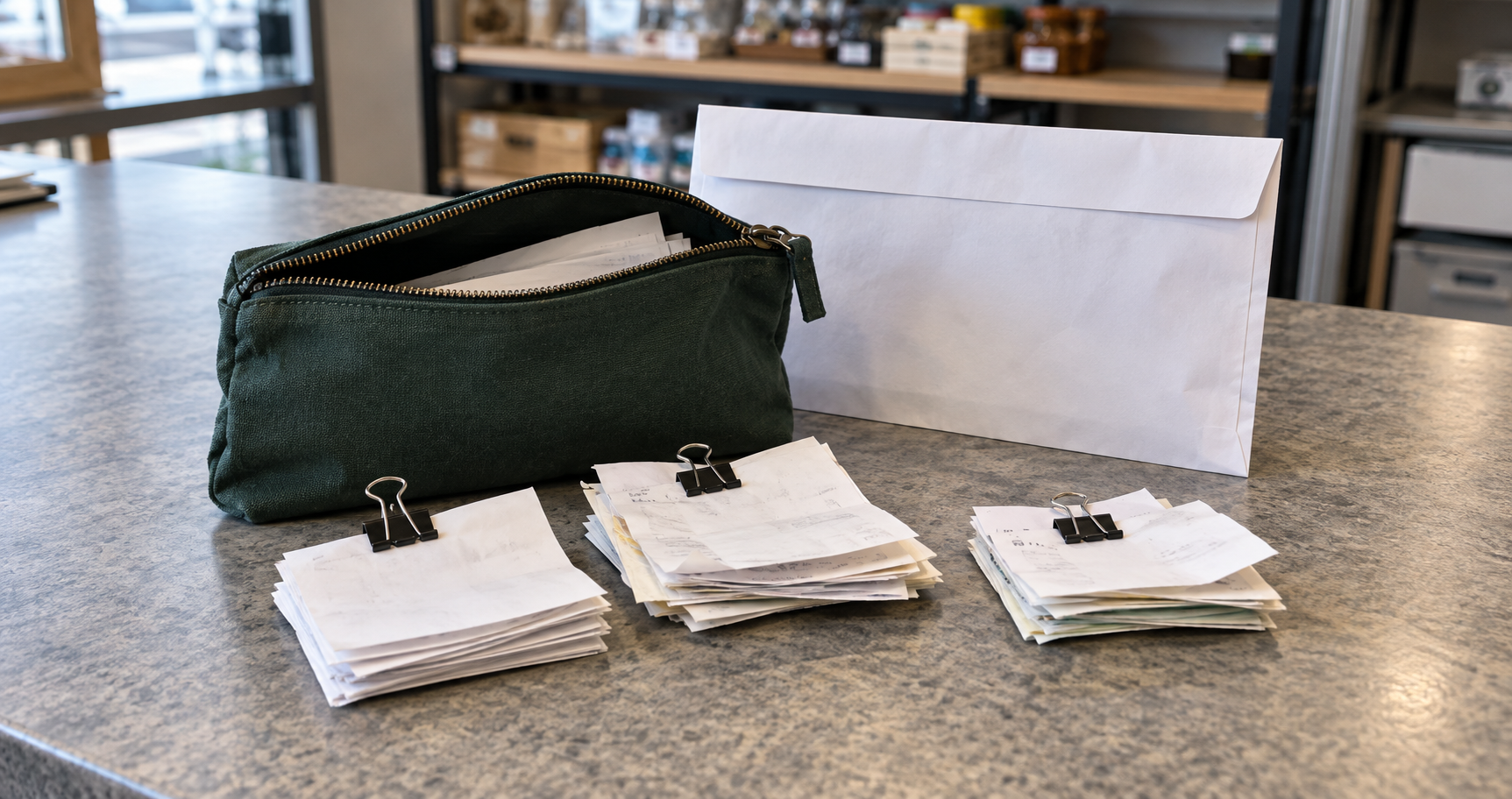
Your customers paid three invoices, but the bank statement shows one deposit. That is not necessarily a mismatch. A deposit can group several receipts, and an undeposited-funds account can preserve the link between the individual payments and the combined amount reaching the bank.
Undeposited funds is a clearing account: a temporary place to record payments before moving them to the bank account in your books. It is not another sales account. Use it only when it fits how you receive and deposit payments. If you already recorded a payment directly to the correct bank account, do not send it through clearing again. That can add work or duplicate the payment.
Follow the receipts before the deposit
Consider three fictional customer receipts: $430, $570 and $250. Assume the invoices and any applicable sales tax were already recorded, all receipts settle those invoices, and there are no processing fees or withheld amounts.
Recording these payments adds $1,250 to undeposited funds. It also reduces accounts receivable, the money these customers owe, by $1,250. It does not create another $1,250 of sales. In this example, you already recorded the sales through the invoices. You now hold the payments instead of the right to collect them.
Keep payment identities attached to the right customer and invoice. Two customers can pay the same amount, so an amount alone is weak evidence for choosing a receipt.
Group the deposit the bank actually received
On Monday, the business deposits only the $430 and $570 receipts together. The deposit is $1,000. The accounting record transfers $1,000 from undeposited funds to the bank account. The remaining clearing balance is $250, representing the receipt still held for a later deposit.
| Event | Increase | Decrease | Clearing balance |
|---|---|---|---|
| Three receipts recorded | $1,250 | $0 | $1,250 |
| Monday deposit | $0 | $1,000 | $250 |
| Later deposit of final receipt | $0 | $250 | $0 |
When the bank reports Monday's $1,000, match it to the recorded deposit using the accounting system's supported process. Do not categorize that bank line as new sales after the invoices and receipts have already been entered. The second deposit follows the same logic when the last receipt reaches the bank.
Separate clearing from bank timing
A payment you still hold is different from a deposit you have already recorded in the bank account in your books. If that recorded deposit has not yet appeared at the bank, it is a deposit in transit. You account for that timing difference when comparing your books with the bank statement. Neither situation calls for inventing revenue.
Retain the deposit slip or other support showing the component receipts and the bank's confirmation where available. Dates, amounts and payment references should tell a consistent story. Do not force several unrelated deposits into one group merely because their sum happens to match a bank amount.
Card processors may deduct fees, refunds or money held in reserve before paying you. Check the settlement details when that happens. Our $1,250 example has none of these adjustments. If the bank receives less than the customer paid, do not assume the difference is an expense you can write off from undeposited funds.
Explain old balances before removing them
- Find the individual receipt behind the balance, its customer and its original date.
- Check whether it is genuinely awaiting deposit, was returned, or belongs to a different deposit.
- Look for a duplicate bank posting or a deposit recorded without selecting the existing receipt.
- Review any correction with its effect on receivables, bank reconciliation and sales tax.
A negative clearing balance can also indicate a deposit recorded without the corresponding receipt or another posting error. Do not delete valid customer payments simply to make the total zero. Correct the identified mistake while preserving the audit trail.
Bookwits can help the practice request deposit support and assign an investigation. It does not maintain the clearing account or match bank-feed transactions. The accounting objective is straightforward: every remaining amount should identify a real, explainable item, not an unexplained difference carried from month to month.