Progress billing and holdbacks: a worked construction bookkeeping case
See how to track construction work billed in stages, money held back and the GST/HST due date. Follow a $120,000 contract example.
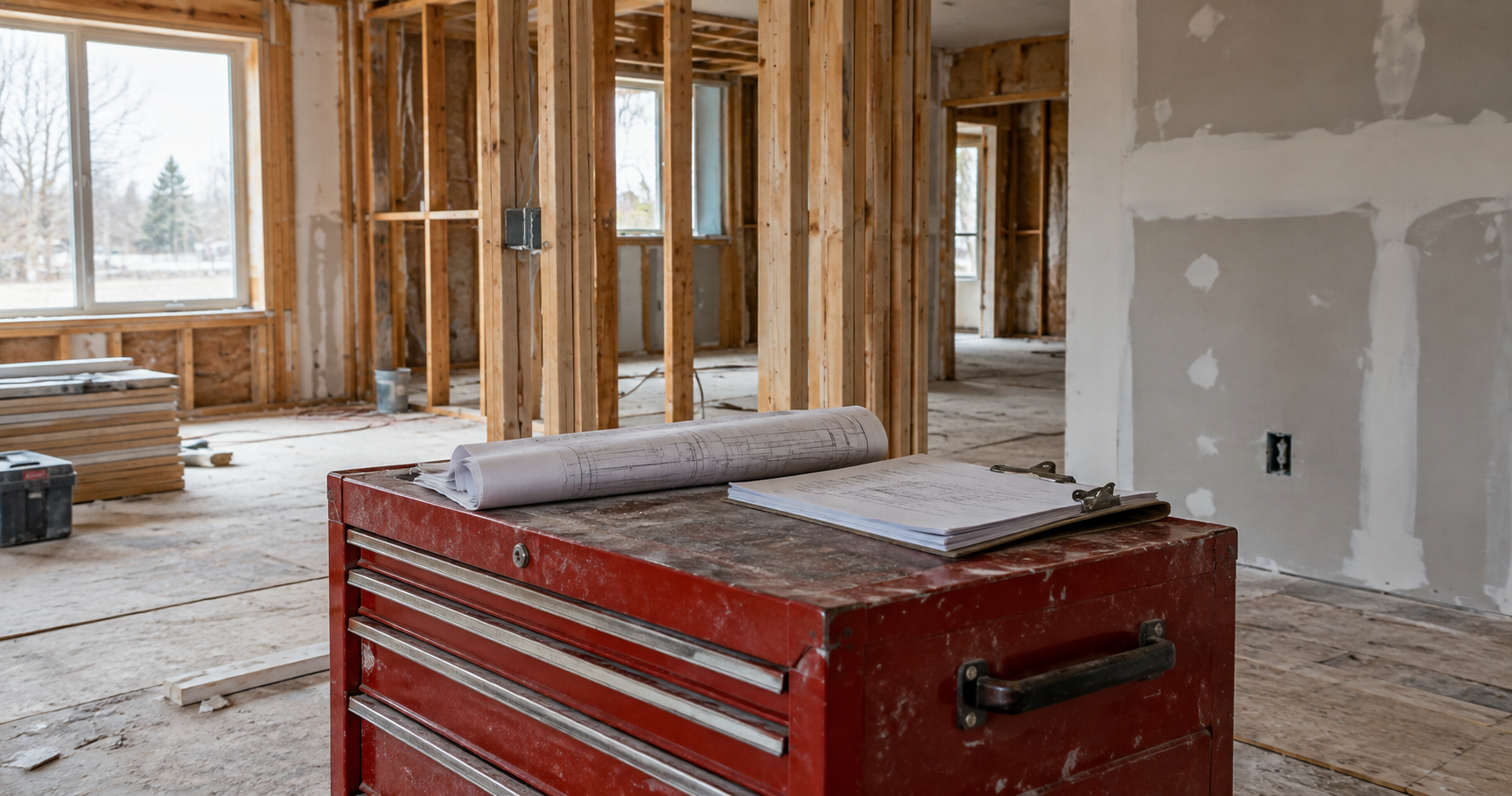
Some construction contracts are billed in stages over several months. A schedule of values lists the price for each part of the work. Part of each bill may be held back until a milestone set by the contract or law. This amount is called a holdback. When it becomes payable depends on provincial law and the contract, not one national rule. Goods and services tax or harmonized sales tax (GST/HST) has a separate timing rule for holdbacks that qualify under the Excise Tax Act.
Why construction billing is staged
A schedule of values breaks the contract price into trades or phases. These might include site preparation, framing, electrical work, drywall and finishing. At each billing date, the contractor submits a progress claim showing how much of each part is complete. Payment is usually for work done so far, not the whole project. This aims to keep payments close to the work completed. The contract sets the terms and any protection for either party; there is no universal guarantee. In the books, track the series of partial invoices. Compare total billings to date with the schedule of values, rather than looking at one invoice.
A progress billing schedule, worked through
Consider a $120,000 renovation contract. Site preparation is priced at $10,000 and is complete. Framing is $40,000 and is also complete. Electrical work is $25,000 and is 60% complete, so $15,000 of that work is done. Drywall at $20,000 and finishing at $25,000 have not started. At the first billing date, completed work totals $10,000 + $40,000 + $15,000 = $65,000 before tax. Show the full $65,000 on the progress claim. A holdback does not reduce the price like a trade discount, which lowers the price before it is recorded. If a 10% holdback applies, show the $6,500 separately as a deduction. That leaves $58,500 payable now, before tax. Keep three running totals: work completed, amounts invoiced and holdbacks withheld. They may differ during the project. They should reconcile when the work is finished and the holdback is released.
What a holdback is, and why it is withheld
A holdback, also called retainage, may serve two different purposes. It may meet legal lien-protection requirements, which concern claims for unpaid construction work. Or it may meet contract conditions about completing the work. These are not the same. Accounting references often use around 10% as an example, but that is not a rate for every contract or province. Track holdbacks separately from amounts payable now and cash collected, such as in their own schedule column. This shows what remains unpaid and why. The accountant decides when and how to record and present the amount, and what to disclose, under the applicable accounting rules. A tracking column does not mean every set of financial statements needs a separate line or note.
Statutory holdbacks, contractual retention, and provincial variance
Provincial law and the contract set when the holdback becomes payable and which lien protections apply. A holdback required by law is different from money the owner negotiates to retain under the contract. The amount, release date and conditions depend on the arrangement. This article does not list provincial percentages or deadlines. Check the rules for the project location and the contract terms. Record which rule applies. Confirm the release timing against current law or with the client's construction lawyer. Do not assume the same date, percentage or process applies in every province.
GST/HST timing on a qualifying holdback
GST/HST is generally payable when an amount is paid or becomes due, whichever happens first. That normally applies to each progress payment. Section 168(7) of the Excise Tax Act has a separate rule for a qualifying holdback. The money must be held pending full and satisfactory performance of the contract. The holdback must be required by federal or provincial law, or by a written agreement for the qualifying contract. The contract must concern construction, renovation, alteration or repair of real property, a ship or another vessel. For an amount that meets the definition, GST/HST on the retained part is deferred. It becomes payable when the holdback is actually paid or becomes payable, whichever happens first, rather than with the rest of the progress bill.
These conditions matter. An informal agreement to leave an invoice unpaid does not automatically qualify under section 168(7). The holdback must be required by applicable federal or provincial law, or set out in a qualifying written construction agreement. It must genuinely be held pending satisfactory completion. You also cannot tax only the holdback and ignore the rest of the progress payment. The regular amount follows the normal tax timing rule. Only the qualifying part gets deferred treatment. Ask a tax professional to confirm whether a particular holdback qualifies. Its label alone is not enough.
What documentation a progress claim needs
Keep records that let an owner, lender or reviewer check the progress claim later. These typically include the schedule of values and confirmation of the percentage complete for this billing period. A site supervisor or payment certifier often signs that confirmation. Keep photos or other physical evidence of completed work, plus a running total of holdbacks. Bookwits tasks and documents can keep the milestone checklist, supporting records, photos, approvals and schedule versions with the project file over several months. Bookwits does not calculate legal lien deadlines or when a provincial holdback period expires. It also does not decide whether section 168(7) applies or calculate the resulting GST/HST timing. The appropriate legal or tax professional must answer those questions.
Frequently asked questions
Does the holdback amount get invoiced again later, or is it paid automatically once a project finishes?
It typically needs its own release claim once the applicable holdback period has passed and any lien or deficiency conditions are satisfied. It is not usually paid automatically without that step, and the exact trigger is set by the applicable provincial legislation together with the contract terms.
Is a 10% holdback a legal requirement everywhere in Canada?
No. Ten percent is common in accounting examples, not a universal rule. The percentage and release timing depend on the applicable provincial construction and prompt-payment legislation and the specific contract. Confirm both for the project rather than assuming the holdback is always 10%.
Does GST/HST apply to the whole progress-billing amount when it is invoiced, or only to the holdback once it is released?
It depends on whether the held-back amount meets the Excise Tax Act qualifying-holdback test in section 168(7). The regular progress-billing amount is taxed under the normal timing rule as it is paid or becomes due. Only an amount that actually qualifies, required by applicable law or a qualifying written construction agreement, held pending satisfactory completion, gets deferred GST/HST timing. Confirm whether a specific holdback meets that definition with a tax professional.
Can Bookwits calculate the GST/HST on a holdback or tell me when a lien period expires?
No. Bookwits can keep the progress-billing schedule, checklist and supporting documents for a project. It does not decide whether a holdback qualifies under the Excise Tax Act. It does not calculate the resulting GST/HST timing or statutory lien deadlines. Those tax and legal questions need the appropriate professional.