Bad-debt write-offs in Canada: accounts, income tax and GST/HST
Learn what changes when a customer cannot pay. Separate the accounting loss from tax claims, with examples of a partial payment and a later recovery.
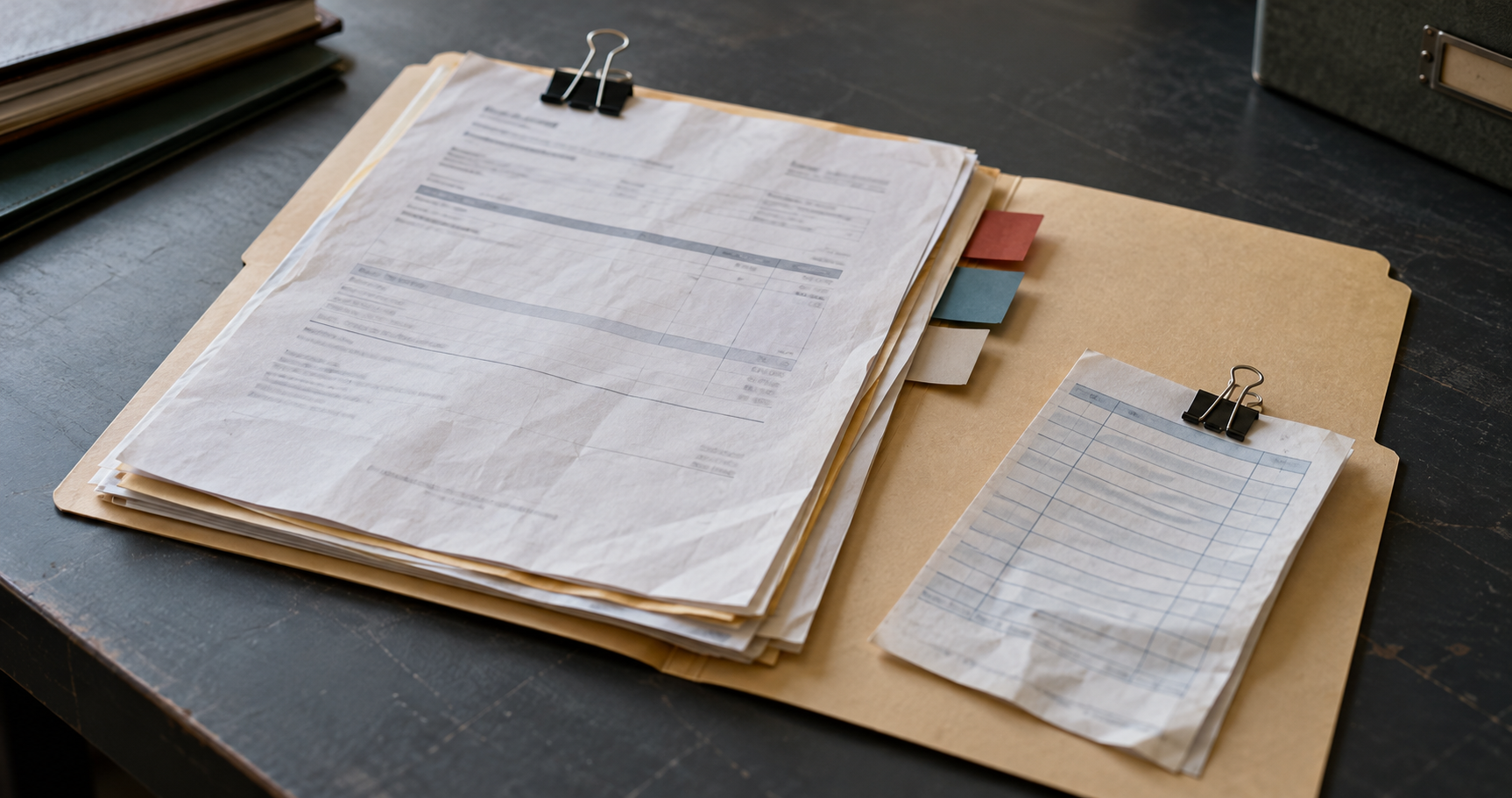
A customer has stopped paying. The invoice is old and reminders go unanswered. The owner asks the bookkeeper to “write it off.” This means removing an amount you no longer expect to collect from accounts receivable, the money customers owe you. Before making an entry, check three things: the accounting treatment, any income-tax deduction, and any relief for goods and services tax or harmonized sales tax (GST/HST).
Those decisions can share evidence without sharing identical conditions or timing. This guide concerns ordinary business trade receivables and the regular GST/HST regime. Personal loans, shareholder debts, specialized lending rules and the quick method require separate advice.
First: check the accounts and why payment is unlikely
An overdue invoice is not automatically irrecoverable. Examine the facts: the customer's financial position, payment history, correspondence, disputes, insolvency information and realistic collection prospects. Document who reviewed the evidence and approved the conclusion. A fixed “90 days means bad” rule is not a substitute for assessing collectibility.
The entry depends on the accounting rules you use and any loss already recorded. You may already have an allowance: an amount set aside in the accounts for expected unpaid invoices. Writing off a particular invoice may use that allowance instead of creating a new expense. Do not record the same loss twice.
Preserve the original invoice and its payment history. A write-off is not the same as a credit note agreeing to reduce the selling price, and it does not necessarily release the customer from the legal debt. If the issue is a genuine pricing correction or cancelled supply, analyze that separately instead of disguising it as non-payment.
Second: check the income-tax deduction
The Canada Revenue Agency (CRA) says a business bad debt can generally be deducted if two conditions are met. You determined in that year that the debt could not be collected, and you had already included the amount in income. An old invoice date or an accounting label alone does not decide which tax year to use.
Check what was actually recognized for tax purposes. An amount never included in income does not become an ordinary business bad-debt deduction merely because the owner expected to receive it. A financial-statement provision and a tax deduction may also differ, requiring an adjustment in the tax working papers.
Keep a concise evidence memo rather than manufacturing a ritual. Record the debt, attempts to resolve it, relevant financial facts and the basis for the year chosen. The appropriate steps depend on the circumstances; this article does not assert that every business must sue before a debt can be considered bad.
Third: check the separate GST/HST conditions
Under CRA's regular GST/HST rules, relief may be available if the tax on a credit sale was already reported and paid to CRA. All or part of the debt must become uncollectible and be written off in the records. The supplier and customer must have dealt at arm's length, as independent parties. Check these conditions. Do not reduce tax automatically whenever you remove an unpaid invoice.
Use the amounts from the original sale. Multiply its GST/HST by the unpaid total being written off. Divide that result by the original sale total. Both totals include GST/HST and any applicable provincial sales tax. Do not simply apply today's tax rate to an old balance.
CRA states that the adjustment must be made on a return filed within four years of the due date of the return for the reporting period in which the bad debt was written off. The relevant clock is not simply four years from the invoice date. Confirm the correct reporting treatment for the filing method and retain the supporting calculation.
An original example with a partial payment
Assume a fictional arm's-length credit sale under the regular regime: $2,000 of services plus $260 Ontario HST, for a $2,260 invoice. The tax was properly reported and remitted. The customer pays $1,130. Later, the remaining $1,130 is supported as uncollectible and approved for write-off. Assume no existing allowance and no separate PST.
| Item | Calculation | Amount |
|---|---|---|
| Original gross invoice | $2,000 + $260 | $2,260 |
| Unpaid amount written off | $2,260 − $1,130 | $1,130 |
| GST/HST adjustment if eligible | $260 × $1,130 ÷ $2,260 | $130 |
| Remaining service amount | $1,130 − $130 | $1,000 |
In this example, remove the $1,130 the customer still owes from accounts receivable. Record the eligible $130 tax recovery in the account used to track that tax. Record the remaining $1,000 as the service loss, assuming the direct-write-off method and no earlier allowance. Have the accountant review the actual entries and tax-year adjustments. A $1,130 expense plus a $130 tax recovery would count the tax twice unless correctly adjusted.
A later payment reopens the tax calculation
Suppose the customer later pays $565 toward that written-off debt. The GST/HST component under the original sale ratio is $565 × $260 ÷ $2,260 = $65. If relief was previously claimed, that tax portion must be included in the applicable reporting-period adjustment. The other $500 follows the appropriate bad-debt recovery and income-tax treatment.
Do not treat the whole receipt as a new sale or leave it unmatched because the old invoice disappeared from an active collection list. Keep a recoveries trail linked to the original debt, relief and reporting periods. Review who will notice a later receipt after the write-off has been approved.
Bookwits can help assign the review, request missing correspondence and follow up on approval or later payments. Make journal entries and file returns in the accounting and tax systems. Keep a clear record of each of the three decisions. One “written off” label does not explain what you actually claimed.
Frequently asked questions
Is a bad-debt write-off the same as forgiving the debt?
Not necessarily. Removing a receivable from the ledger and legally releasing the customer are different matters. Obtain appropriate advice before communicating that a debt has been forgiven.